Special education schools play a pivotal role in fostering social competence among students with diverse learning needs. By integrating tailored curricula, collaborative teaching strategies, and supportive environments, these schools create opportunities for children to develop communication, empathy, and teamwork skills that are essential for lifelong success. The following sections explore how specialized settings enhance social development, the key practices employed, and actionable steps educators and families can take to reinforce these gains.
Why Social Skills Matter in Special Education
Social competence is more than just friendly interaction; it directly influences academic achievement, emotional well-being, and future independence. For learners who face cognitive, sensory, or emotional challenges, explicit instruction in social behavior is often required. In a dedicated special education setting, teachers can:
- Observe and respond to individual social cues in real time.
- Provide consistent reinforcement for positive interactions.
- Adapt activities to match each student’s developmental level.
Research consistently shows that students who receive structured social instruction demonstrate higher self-esteem and reduced behavioral issues. Read more about this topic.
Core Strategies for Enhancing Social Skills
1. Structured Peer Interaction
Planned group activities encourage students to practice turn-taking, listening, and conflict resolution. Common formats include:
- Small-group projects with clearly defined roles.
- Peer-buddy systems that pair students with complementary strengths.
- Cooperative games that require shared problem-solving.
These interactions are monitored by educators who can intervene gently, model appropriate behavior, and provide immediate feedback. Learn more in this detailed guide.
2. Social Narratives and Role-Playing
Social stories break down complex situations into simple, relatable steps. Role-playing allows students to rehearse these steps in a safe environment. Effective implementation includes:
- Visual scripts that illustrate expected responses.
- Repetition of scenarios to build confidence.
- Debrief sessions where learners reflect on what worked and what could improve.
When combined with visual supports, these tools become powerful catalysts for generalizing skills to real-world settings. Explore further insights here.
3. Integrated Communication Technologies
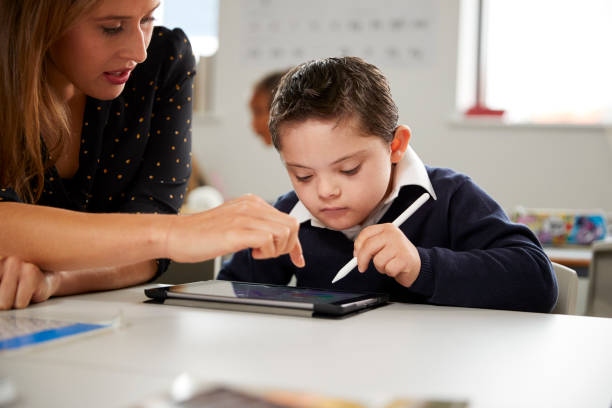
Assistive technology, such as tablets and speech-generating devices, bridges communication gaps. In special education schools, technology is used to:
- Facilitate expressive language through picture-based apps.
- Record and playback social scripts for independent practice.
- Provide instant visual feedback during group work.
These tools empower students to participate more fully in social exchanges, reducing frustration and encouraging peer acceptance. Find additional information here.
Creating a Supportive Environment
A nurturing atmosphere is essential for social growth. Key environmental factors include:
- Predictable routines: Consistency reduces anxiety and frees mental resources for interaction.
- Positive reinforcement: Specific praise for social attempts reinforces desired behavior.
- Safe spaces: Quiet corners where students can self-regulate prevent overload during group activities.
Teachers collaborate with families to ensure that these principles extend beyond the classroom, creating continuity between school and home life.
Role of Educators and Families
Effective social skill development requires a partnership between school staff and caregivers. Strategies for collaboration include:
- Regular communication logs that track social milestones.
- Joint workshops where parents learn to reinforce classroom techniques at home.
- Shared goal-setting meetings to align expectations and celebrate progress.
When families are equipped with the same language and tools used in school, children experience a seamless reinforcement loop that accelerates learning. Read more about this topic.
Measuring Progress and Adjusting Instruction
Data-driven assessment ensures that interventions remain effective. Common measurement approaches are:
- Observation checklists completed during peer activities.
- Self-report scales adapted for developmental levels.
- Goal-tracking software that visualizes growth over time.
Results guide educators in refining lesson plans, introducing new peer partners, or adjusting the level of support provided. Continuous monitoring also helps celebrate incremental successes, reinforcing motivation. Learn more in this detailed guide.
Conclusion
Special education schools offer a uniquely structured environment where social skills can be taught deliberately, practiced regularly, and reinforced consistently. By employing peer interaction, social narratives, assistive technology, and a collaborative home-school partnership, these institutions lay a solid foundation for students to navigate social landscapes confidently. Ongoing assessment and a supportive atmosphere ensure that progress is sustained, preparing learners for inclusive participation in broader community settings.